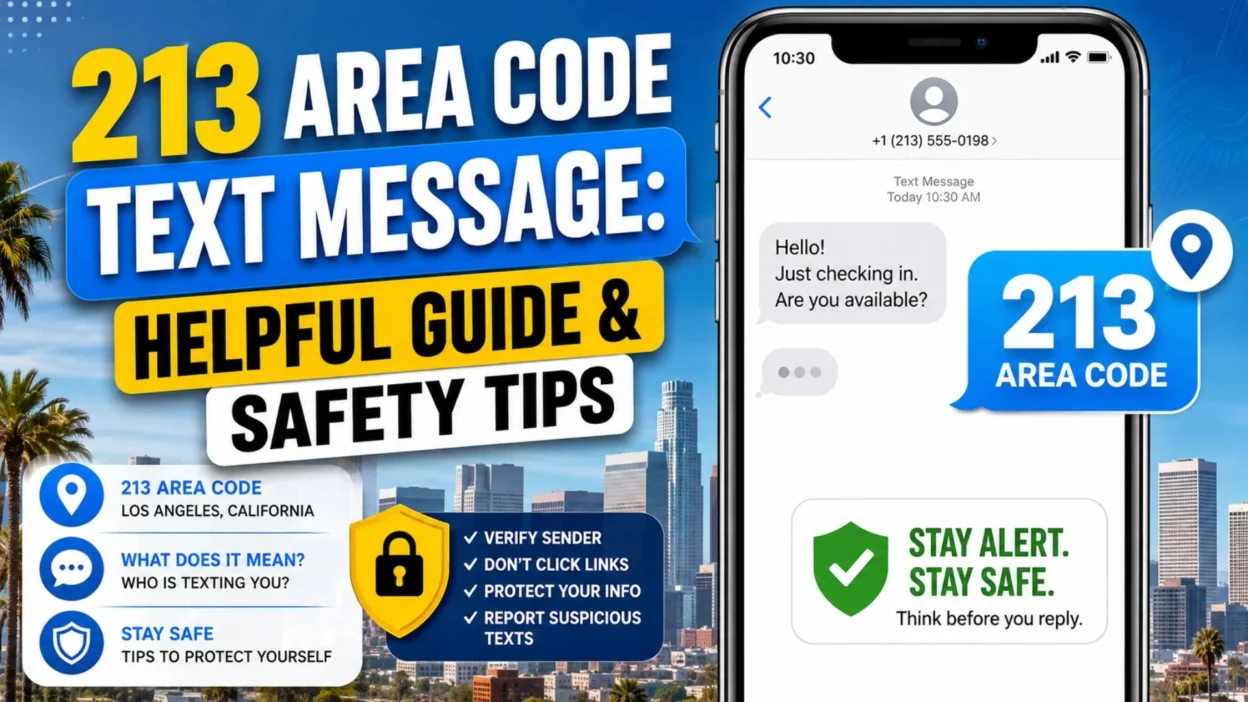
- Getting a text from an unfamiliar number can make you pause, especially when you do not recognize the area code. If you recently received a 213 area code text message, you may wonder where the number comes from, who might be behind it, and whether you should respond.
- The 213 area code is associated with Los Angeles, California, particularly the central Los Angeles area. The North American Numbering Plan Administrator (NANPA) records 213 as a California area code and documents its long history in the Los Angeles numbering system.
- However, an area code alone cannot tell you exactly who sent a message. A person can keep a number after moving, and phone numbers can also be used for businesses, services, automated notifications, or unwanted messages.
- So, if a random 213 number suddenly appears in your messages, do not assume the sender is someone you know just because the number looks familiar or local. Take a moment to check the message before replying.
Top 213 Area Code Text Message Examples
- These examples cover common situations you might encounter when a message arrives from a 213 number.
- “Hi, is this still your number?” A simple message that may be genuine, but it can also come from an unknown sender.
- “Hey! Are you available today?” If you do not recognize the person, avoid replying automatically.
- “I think I have the wrong number. Sorry!” Some unexpected conversations begin with an innocent-looking mistake.
- “Can you call me when you get this?” Check whether you recognize the number before calling back.
- “Hello, are you free to chat?” An unfamiliar sender does not automatically become trustworthy because the message sounds friendly.
- “Is this Sarah’s number?” A wrong-number message may genuinely be accidental, but you can simply leave it unanswered if you are unsure.
- “We met recently. Do you remember me?” Be cautious if the sender gives vague details instead of clearly identifying themselves.
- “Hey, long time no talk!” If you have no idea who sent it, do not feel pressured to continue the conversation.
- “Can you help me with something?” A vague request can be a reason to wait for more context rather than responding immediately.
- “Are you still coming today?” This could be a genuine wrong-number text, especially if you have no connection to the sender.
- “Good morning! Hope you’re doing well.” Friendly wording does not confirm the sender’s identity.
- “Did you get my last message?” If you never received an earlier message, treat the number as unfamiliar.
- “Can you send me your contact information?” Avoid sharing personal details with someone you do not recognize.
- “I need to ask you something important.” If the sender refuses to explain what they need, there is no reason to rush into a conversation.
- “Hey, are you the person I spoke with yesterday?” Verify the context before giving the sender any information.
- “I saved this number, but I forgot your name.” A genuine contact may explain themselves clearly when asked.
- “Can you confirm who this is?” You can choose not to identify yourself to an unknown number.
- “Sorry, I may have texted the wrong person.” If the conversation ends there, there may be nothing else you need to do.
- “Are you in Los Angeles?” Remember that a 213 area code does not prove that the sender is physically in Los Angeles right now.
- “I got your number from a friend.” If the sender will not identify the friend, consider ending the conversation.
- “Can we talk about something?” You do not have to respond simply because someone asks.
- “I’m trying to reach someone with this number.” If the explanation seems reasonable, you can still choose not to engage.
- “Who am I speaking with?” Do not feel obligated to reveal your name just because someone asks.
- “Hey! Did I reach the right person?” A straightforward question may be harmless, but context still matters.
- “Please let me know if this is your number.” If you do not recognize the sender, you can ignore the message.
- “I think we have the same contact saved.” Ask yourself whether you actually recognize the person before continuing.
- “Can you confirm your name?” Be careful about providing personal information to unknown contacts.
- “Are you available for a quick question?” There is no need to respond immediately to an unexpected request.
- “Sorry for contacting you out of nowhere.” An apology does not establish who the sender really is.
- “Can you tell me if I have the correct number?” If the message seems suspicious, leaving it unanswered is a reasonable choice.
Short 213 Area Code Text Messages
- Short messages are easy to read, but they can still leave you wondering why an unknown 213 number contacted you.
- “Hi, who is this?”
- “Did you mean to text me?”
- “Wrong number?”
- “Who’s this?”
- “Can I help you?”
- “I don’t recognize this number.”
- “Please identify yourself.”
- “How did you get my number?”
- “I think you have the wrong person.”
- “Sorry, I don’t know this number.”
- “What is this regarding?”
- “Can you explain?”
- “Who were you trying to reach?”
- “I’m not sure who this is.”
- “Please provide some context.”
- “I don’t recognize you.”
- “Is this a mistake?”
- “What do you need?”
- “I may have the wrong contact.”
- “I’m going to leave this unanswered.”
What Is the 213 Area Code?
- The 213 area code belongs to California and is strongly associated with Los Angeles. NANPA records show that the 213 numbering area has been part of the Los Angeles telephone system for decades.
- The area code should be viewed as a clue about the telephone number, not proof of the sender’s current location. Someone with a 213 number could live somewhere else today.
- NANPA also documents the 213/323 numbering relationship, including a later overlay involving the two area codes.
- Therefore, when you receive a 213 area code text message, focus less on the three digits and more on the actual content, sender identity, and context.
- If the text asks for sensitive information, money, login details, verification codes, or urgent action, pause before doing anything. An unfamiliar number deserves extra caution.
Best 213 Area Code Text Messages for Sharing
- If you want to share a quick reminder with friends or family about an unfamiliar text, these simple messages can help you explain the situation clearly.
- “I received a text from a 213 number, but I don’t recognize the sender.”
- “A 213 area code text message showed up today, and I’m checking it before replying.”
- “The number has a Los Angeles area code, but I’m not sure who it belongs to.”
- “I got a message from an unknown 213 number. I’m leaving it alone for now.”
- “An unfamiliar 213 number contacted me, so I’m checking the message carefully.”
- “I received a random text from a 213 area code number. Does anyone recognize it?”
- “This 213 number is not saved in my contacts, so I’m being cautious.”
- “I got a message from a 213 number, but I don’t remember giving them my number.”
- “The area code is 213, but that alone doesn’t tell me who sent the message.”
- “I’m not responding to this unknown 213 number until I understand the reason for the text.”
- “Has anyone else received a strange message from a 213 number?”
- “I received a 213 area code text and decided to verify the sender first.”
- “This number looks unfamiliar, so I’m not clicking anything in the message.”
- “I got an unexpected text from 213. I’m checking the context before taking action.”
- “An unknown 213 number reached out, so I’m treating it carefully.”
How to Handle an Unknown 213 Area Code Text Message
- Receiving an unexpected text does not mean something is wrong. Still, a little caution can help you avoid unnecessary problems.
- Check the sender. Look at the complete phone number rather than relying only on the 213 area code.
- Read the message carefully. Notice whether it mentions something you actually recognize, such as a person, appointment, business, or service you use.
- Do not rush to reply. A message that creates urgency can make you act before you have enough information.
- Avoid clicking unexpected links. If a text contains a link you were not expecting, do not open it simply because the message looks professional.
- Never share verification codes. Treat one-time passcodes and account verification codes as private information.
- Be careful with personal details. Avoid giving an unknown sender your address, passwords, account information, or other private details.
- Watch for unusual requests. Requests involving money, gift cards, payments, account access, or sensitive information deserve extra caution.
- Verify independently. If the message claims to come from a company or organization, use contact information you already trust instead of relying on the text.
- Block the number if needed. If you do not want further messages from the sender, your phone may allow you to block the number.
- Report suspicious messages. Your phone carrier or messaging app may provide options for reporting unwanted or suspicious texts.
Why Did I Get a Text From a 213 Number?
- There are several ordinary reasons an unfamiliar number might contact you. The area code itself does not explain the sender’s identity.
- It could be a wrong number. Someone may have entered a phone number incorrectly while trying to contact another person.
- It could be an old contact. A person you once knew may have your number saved even if you have not spoken recently.
- It could be a business message. A company or service may send appointment reminders, updates, or other notifications.
- It could be an automated message. Some services send texts automatically after an action or subscription.
- The sender may have moved. A phone number can stay associated with its original area code even after its owner relocates.
- It could be unwanted marketing. Some unexpected messages are promotional or unsolicited.
- It could be a suspicious message. If the text asks you to click a link, send money, provide private information, or act urgently, take extra care.
213 Area Code Text Message Safety Tips
- A useful rule is simple: you do not need to respond just because someone texted you.
- Keep private information private. Do not send passwords, financial details, account credentials, or security codes to an unfamiliar number.
- Question unexpected urgency. Messages that say you must act immediately deserve careful attention.
- Check links before interacting. An unfamiliar text with a link can be a reason to stop and verify the sender first.
- Do not trust appearances alone. A polished message, familiar company name, or local-looking area code does not automatically prove that a text is genuine.
- Use trusted contact methods. If a message claims to represent a company, visit the company’s official website or use a known phone number to verify the claim.
- Keep your conversations private. Avoid sharing personal information simply because a stranger sounds friendly.
- Use your phone’s blocking features. Blocking can help reduce repeated unwanted messages.
- Report suspicious activity. If a message appears deceptive or abusive, use the reporting tools available through your phone, carrier, or messaging service.
- Trust your caution. If something about a text feels unusual, you can stop responding and verify the situation first.
One-Line 213 Area Code Text Messages
- These short lines are useful when you want a quick response or reminder without writing a long explanation.
- “I don’t recognize this 213 number.”
- “Please verify who you are before I respond.”
- “I received your message, but I need more context.”
- “I’m not familiar with this number.”
- “I’ll verify the sender before clicking anything.”
- “An area code doesn’t prove who sent the text.”
- “I’m treating this unexpected message with caution.”
- “I won’t share private information with an unknown sender.”
- “I’m checking the message before taking action.”
- “If this is genuine, please explain the reason for contacting me.”
- “I don’t respond to unfamiliar numbers without context.”
- “This 213 text caught me by surprise.”
- “I’m verifying the sender before continuing.”
- “Unknown number, no quick reply.”
- “A strange text deserves a careful look.”
- “I’d rather verify first than guess.”
- “I’m not clicking unexpected links.”
- “I’ll confirm the sender through a trusted channel.”
- “The 213 area code alone isn’t enough to identify someone.”
- “When in doubt, pause before replying.”
What Should You Do If a 213 Text Seems Suspicious?
- Start by avoiding interaction with links, attachments, or requests in the message. You can simply stop and evaluate the situation.
- If the sender claims to represent a business, do not use a phone number or link supplied in the suspicious message to verify the claim. Instead, find the organization through a trusted source and contact it independently.
- If the text asks for a password, security code, financial information, or payment, do not provide it through the conversation.
- You can also block or report the number if the messages continue. Your phone’s available options may vary depending on your device and carrier.
- Most importantly, do not assume that a 213 area code means the text is automatically safe or unsafe. The area code identifies part of the telephone numbering system, while the message itself provides more useful clues about what is happening.
Quick Things to Remember About a 213 Area Code Text
- 213 is a California area code.
- It is closely associated with Los Angeles.
- The area code does not identify the individual sender.
- A 213 number does not prove the sender currently lives in Los Angeles.
- Unexpected messages deserve a quick review before you respond.
- Never share sensitive information with an unknown sender.
- Avoid unexpected links until you verify their source.
- You can ignore, block, or report unwanted messages when appropriate.
Save These 213 Area Code Text Message Reminders
- “Unknown number? Check first.”
- “Local area code does not equal trusted sender.”
- “Unexpected link? Pause before clicking.”
- “Private information stays private.”
- “Urgent request? Verify independently.”
- “When you’re unsure, don’t rush.”
- “A familiar-looking number can still be unfamiliar.”
- “Read carefully before replying.”
- “Verify important requests through trusted channels.”
- “Your phone gives you the option to step back.”
Best Messages for Captions
- These caption ideas work well when you want to share a quick thought about receiving an unexpected 213 area code text message.
- “Unexpected text, unexpected mystery. 📱”
- “When a random 213 number suddenly appears in your messages.”
- “213 area code, but who’s behind the screen?”
- “A mystery text deserves a little detective work. 🔎”
- “Unknown number? Pause before you play along.”
- “Not every familiar-looking number belongs in your contacts.”
- “Checking first, replying later.”
- “A random text can wait while you verify the sender.”
- “213 popped up in my messages, and now I have questions.”
- “When the text is unexpected, caution comes first.”
- “No rush, no guessing, just verify.”
- “One unexpected message can leave you wondering.”
- “Area code recognized. Sender? Not so much.”
- “A little caution goes a long way with unknown texts.”
- “If I don’t know the sender, I don’t rush the reply.”
Copy-Paste Ready Messages
- These messages are designed for quick sharing when you want to explain what happened without writing everything from scratch.
- “I received a text from a 213 number that I don’t recognize. I’m checking the sender before responding.”
- “I got an unexpected 213 area code text message. The area code is linked with Los Angeles, but I still don’t know who sent it.”
- “A random 213 number texted me today. I’m not clicking anything or sharing information until I know who it is.”
- “I received a message from an unfamiliar 213 number. I’m going to verify the sender through a trusted source before doing anything.”
- “The number has a 213 area code, but that alone doesn’t tell me who is behind the message.”
- “If you receive an unexpected text from a 213 number, take a moment to check the message before replying.”
- “I don’t recognize this 213 number, so I’m leaving the conversation alone until I have more context.”
- “A message from an unknown number doesn’t require an immediate response. I’d rather verify first.”
- “This 213 text came out of nowhere. I’m checking whether the sender is someone I actually know.”
- “I received a message asking for information from an unfamiliar 213 number. I’m not sharing anything until I verify it.”
- “The message looks friendly, but I still don’t recognize the sender. I’m choosing caution before continuing.”
- “I got a text from 213, but I’m not assuming it’s legitimate just because the area code is familiar.”
- “If an unknown number sends you an unexpected link, pause and verify the source before opening it.”
- “I’m keeping my personal information private while I figure out who sent this 213 area code text.”
FAQ About 213 Area Code Text Messages
What is the 213 area code?
- The 213 area code is a California telephone area code associated with Los Angeles, particularly central parts of the city. It is one of the area codes used in the Los Angeles region.
Why did I get a text from a 213 area code?
- You may have received it because someone has the wrong number, a business or service is contacting you, an old contact has reached out, or the message is unwanted. The area code alone cannot tell you why the sender contacted you.
Is a 213 area code text message automatically a scam?
- No. A 213 number can belong to an ordinary person, business, or service. However, an unexpected message should still be treated carefully, especially if it asks for money, private information, security codes, or urgent action.
Should I reply to an unknown 213 number?
- You do not have to reply. If you do not recognize the sender, consider checking the message carefully first. If it contains suspicious requests or links, avoid interacting with them until you can independently verify the sender.
Can I block a 213 area code number?
- You can generally block an individual unwanted number through your phone’s messaging or calling features. The exact steps depend on your device and operating system.
Final Thoughts on a 213 Area Code Text Message
- Receiving a 213 area code text message can create an instant question: Who is this, and why are they contacting me? The good news is that you do not need to solve the mystery immediately.
- A 213 area code is associated with Los Angeles, California, but an area code does not reveal the sender’s identity or guarantee their current location. That is why the actual message matters more than the first three digits.
- If you recognize the sender and the message makes sense, you can handle it normally. If the number is unfamiliar, take a moment to look for context. Be especially careful when a message requests personal information, payment, account credentials, verification codes, or immediate action.
- You can also ignore, block, or report unwanted messages when appropriate. Most importantly, never let an unexpected text pressure you into making a quick decision.
- Save this guide if you frequently receive messages from unfamiliar numbers. When something feels uncertain, pause, verify, and protect your information before you respond.

Emma Richardson is a content writer passionate about creating heartfelt messages, wishes, and greetings for every occasion. She enjoys helping readers express their emotions with meaningful words that strengthen relationships and celebrate life’s special moments.