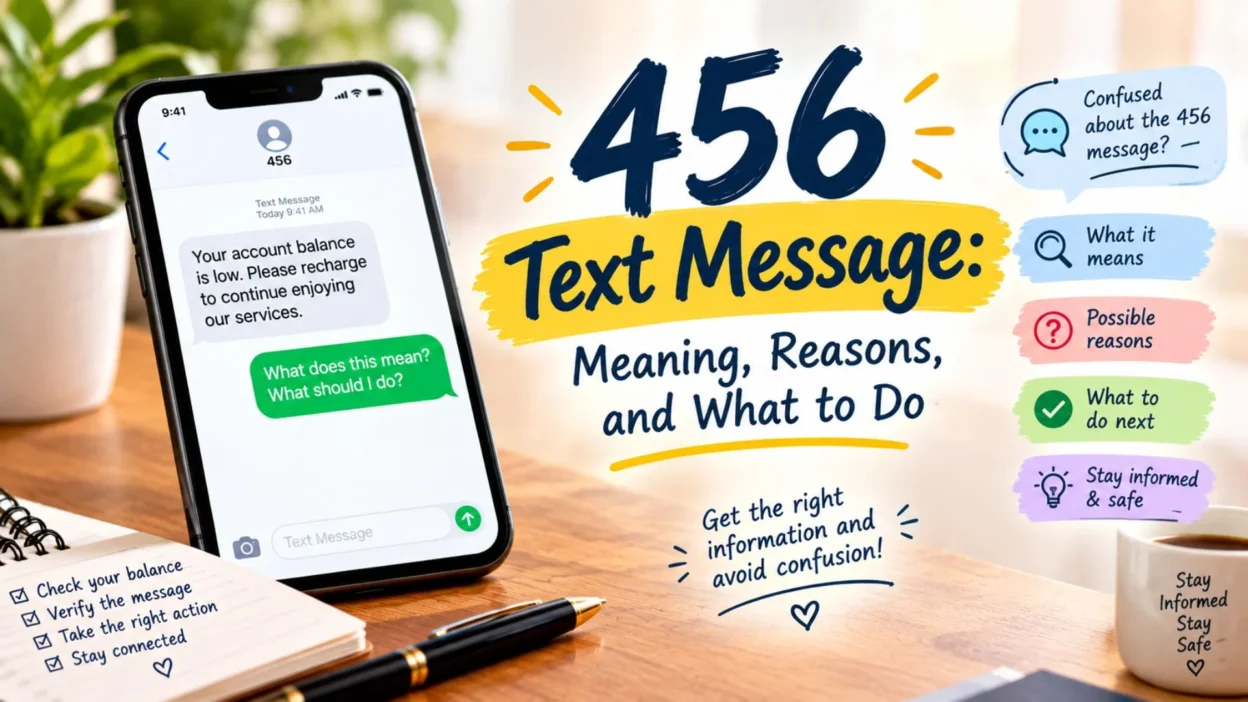
Have you received a 456 text message and wondered why it appeared on your phone? Seeing an unfamiliar number can be confusing, especially when you do not remember signing up for anything or requesting a message. In some cases, short numbers are used for automated alerts, verification services, account notifications, or other messaging systems. However, the exact meaning of 456 can depend on your mobile carrier, location, and the service behind the message.
Before you reply, click a link, or share any information, it is worth taking a closer look at the message. The wording, sender details, and reason for receiving it can provide useful clues. An unexpected text does not automatically mean you have been scammed. Still, messages that request passwords, payment details, or security codes should be treated carefully. In this guide, we will explain what a 456 text message may mean, why you might receive one, and what you should do if you do not recognize it.
What Is a 456 Text Message?
Seeing an unfamiliar number in your messages can immediately make you curious. You may wonder who sent it, why you received it, or whether you need to respond.
A 456 text message can be confusing because short numbers are sometimes used for automated alerts, business messaging, verification services, or carrier-related communications. However, the meaning of a short code can vary by country, mobile provider, and service.
Therefore, the number alone is not enough to identify the sender with certainty. The message itself provides important clues. Look at its wording, any links, the sender name, and what happened shortly before you received it.
If you recently signed up for a service, requested a verification code, changed an account setting, or contacted a company, the message may be connected to that activity. On the other hand, an unexpected message asking for personal information deserves extra caution.
Why Did I Receive a 456 Text Message?
There are several possible reasons an unfamiliar short code can appear on your phone.
- Automated notification: Some services use short codes to send automatic updates.
- Account activity: A message may relate to a recent sign-in, account change, or service request.
- Verification: Some platforms send temporary codes through automated messaging systems.
- Promotional communication: Businesses sometimes use short numbers for marketing messages.
- Carrier activity: Your mobile provider may use automated numbers for certain account or network notifications.
- Service alerts: A company or platform may send reminders, confirmations, or status updates.
The important point is that receiving a message from 456 does not automatically mean something is wrong.
Instead, check the context. Think about whether you recently interacted with a website, app, company, or mobile service.
Is 456 a Short Code?
A short code is a shortened telephone number used by organizations and messaging services to communicate with customers.
Unlike an ordinary phone number, a short code can be much easier for automated messaging systems to use. Depending on the country and carrier, these numbers may support alerts, verification messages, customer notifications, or marketing communications.
However, short-code assignments are not identical everywhere.
That means a number used for one purpose in one country may have a different purpose elsewhere. Consequently, readers should avoid assuming that every 456 message has the same source.
If you are trying to identify a particular message, the actual text is usually more useful than the number alone.
What Should I Do If I Receive a 456 Text Message?
Start by reading the message carefully.
If it clearly relates to something you recently requested, it may simply be an automated notification. For example, you might recognize the name of a service you recently used.
However, be more careful if the message:
- Requests your password or security code.
- Asks for banking or payment information.
- Tells you to urgently send money.
- Contains a suspicious-looking link.
- Claims your account will immediately be closed.
- Uses threatening or unusually urgent language.
- Mentions an account you do not recognize.
In those situations, avoid clicking unfamiliar links or sharing sensitive information.
Instead, open the official app or website yourself and check your account there. This approach is safer than using a link provided in an unexpected text.
Can a 456 Text Message Be a Scam?
An unfamiliar short code does not automatically make a message fraudulent. Nevertheless, scammers can imitate legitimate companies and create messages designed to look convincing.
Therefore, focus on the message’s behavior rather than the number alone.
A suspicious message may create urgency. It might tell you that something is wrong and ask you to act immediately. It could also request information that a legitimate company would normally not ask for through an unsolicited text.
For example, be cautious if a message says you must provide a password, payment details, or a one-time security code through a link.
When in doubt, verify the information independently.
Do not use contact details provided by the suspicious message. Instead, visit the company’s official website or use its official app to find customer support information.
456 Text Message and Verification Codes
One possible reason for receiving an unfamiliar text is account verification.
Many online services use text messages to confirm that someone has access to a particular phone number. These messages may contain temporary codes that expire after a short period.
If you requested the code, follow the instructions provided by the service you were using.
However, if you did not request a verification code, do not share it with anyone.
An unexpected code can sometimes mean someone entered your phone number while attempting to access or create an account. It does not automatically prove that your account was compromised, but it is a good reason to pay attention.
If the unexpected messages continue, check the affected account directly and review its security settings.
Why Did 456 Text Me Without Warning?
Unexpected messages can happen for ordinary reasons.
Perhaps a company sent an automated notification. Maybe an account request was made using your number. There could also be a delayed message from a service you previously interacted with.
Another possibility is that someone accidentally entered your phone number.
Therefore, receiving one unexpected message does not necessarily indicate a serious problem.
Still, repeated messages deserve more attention. If the content looks suspicious, avoid responding until you can verify who sent it.
Should I Reply to a 456 Text Message?
There is no universal answer.
If the message comes from a service you recognize and clearly tells you how to respond, you can follow the service’s normal instructions.
However, you should avoid replying to an unexpected message when you cannot verify its source.
In particular, never send passwords, payment information, security codes, or other sensitive details through an unsolicited text.
When a message asks you to take an important action, verify that request through the organization’s official app or website.
Can I Block a 456 Text Message?
If your phone allows you to block or report a particular sender, you can use those features for unwanted messages.
The exact steps vary between iPhone, Android, and mobile carriers. Generally, you can open the conversation, select the sender or message options, and look for blocking or reporting features.
Blocking can stop future messages from that particular sender. However, it may not stop every message from the same organization if different sending numbers are used.
For persistent unwanted messages, your carrier may also provide spam-reporting or filtering tools.
What If the Message Contains a Link?
Treat unexpected links carefully.
A familiar-looking company name does not guarantee that the link is legitimate. Scammers can use convincing wording to encourage people to click quickly.
Instead of opening the link, go directly to the company’s official website or open its official app.
Then check whether there is actually an alert or account problem.
This small habit can prevent many unnecessary security risks.
How to Check Where a 456 Message Came From
You can use several clues to investigate an unfamiliar message.
- Read the entire message: Look for the company or service name.
- Check recent activity: Think about services you recently used.
- Review your accounts: Look for unexpected sign-ins or requests.
- Check the sender information: Your phone may display additional details.
- Avoid suspicious links: Verify through an official source instead.
- Contact the provider: Ask your carrier or the relevant company if the message remains unclear.
Most importantly, do not rely on the number alone.
The message content, timing, and surrounding account activity provide much more useful information.
456 Text Message on iPhone
If you see a 456 text message on an iPhone, the basic approach is straightforward.
First, read the message and identify whether it mentions a service you recognize. Then consider whether you recently requested a verification code or account notification.
If the message looks suspicious, avoid interacting with its links or requests.
You can also use Apple’s built-in messaging features to report or block unwanted communications when appropriate.
Remember that an iPhone displaying a short code does not automatically confirm that the sender is legitimate. The same safety principles apply regardless of the device.
456 Text Message on Android
Android users may also receive messages from short codes.
The exact interface differs between Android phones and messaging apps. However, the basic process remains similar.
Read the message carefully and determine whether you recognize the service. If it contains a verification code you did not request, do not share that code.
For suspicious or unwanted messages, use your messaging app’s available spam, report, or blocking options.
If you are unsure, verify the message through the company’s official website or app rather than following instructions inside the text.
What If 456 Messages Keep Arriving?
Repeated messages can be more concerning than a single unexpected notification.
First, determine whether the messages are coming from the same service. Then check whether you recently subscribed to alerts or requested account activity.
If you do not recognize the service, consider blocking or reporting the messages through your phone or carrier.
You should also review important online accounts if the messages involve verification codes or login attempts.
Most importantly, do not respond simply because the messages keep appearing. Repeated contact does not make an unknown sender trustworthy.
How to Stay Safe From Suspicious Texts
A few simple habits can make text-message safety much easier.
- Never share passwords through unexpected messages.
- Do not give anyone a one-time verification code.
- Avoid clicking unfamiliar links.
- Verify unexpected account alerts independently.
- Use official apps instead of message links when possible.
- Block persistent unwanted messages.
- Report suspicious texts through available carrier or messaging tools.
- Keep your phone and important apps updated.
- Review account security when unexpected verification messages appear.
These habits are useful for any unfamiliar sender, not only 456.
Frequently Asked Questions About 456 Text Message
What does a 456 text message mean?
A 456 text message may be associated with an automated messaging service, notification, verification process, or other short-code communication. Its exact meaning depends on the country, carrier, and service involved.
Is a 456 text message legitimate?
It can be legitimate, but the number alone does not prove authenticity. Check the message content and verify the sender through an official source before taking action.
Should I click a link in a 456 text?
If you did not expect the message, it is safer not to click the link. Instead, open the relevant company’s official app or website yourself.
What should I do if I receive an unexpected verification code?
Do not share the code with anyone. If you did not request it, check the associated account directly and consider reviewing its security settings.
Can I block messages from 456?
You may be able to block or report the sender through your phone’s messaging app. Carrier options may also be available, depending on your mobile service.
Conclusion
Seeing a 456 text message can leave you wondering whether it is a routine notification or something that needs attention. In many cases, unfamiliar short codes are connected with automated communication, verification, alerts, or business messaging.
However, the number itself does not tell the entire story.
Before responding, look at the message carefully and consider whether you recently used the service mentioned. If the message asks for sensitive information or urges you to click an unexpected link, pause and verify it independently.
You do not need to panic over one unfamiliar message. At the same time, you should not ignore clear warning signs.
When something feels unusual, the safest approach is simple: verify first, then act.
That small habit can help you understand an unexpected 456 text message while keeping your personal information safer.

Emma Richardson is a content writer passionate about creating heartfelt messages, wishes, and greetings for every occasion. She enjoys helping readers express their emotions with meaningful words that strengthen relationships and celebrate life’s special moments.