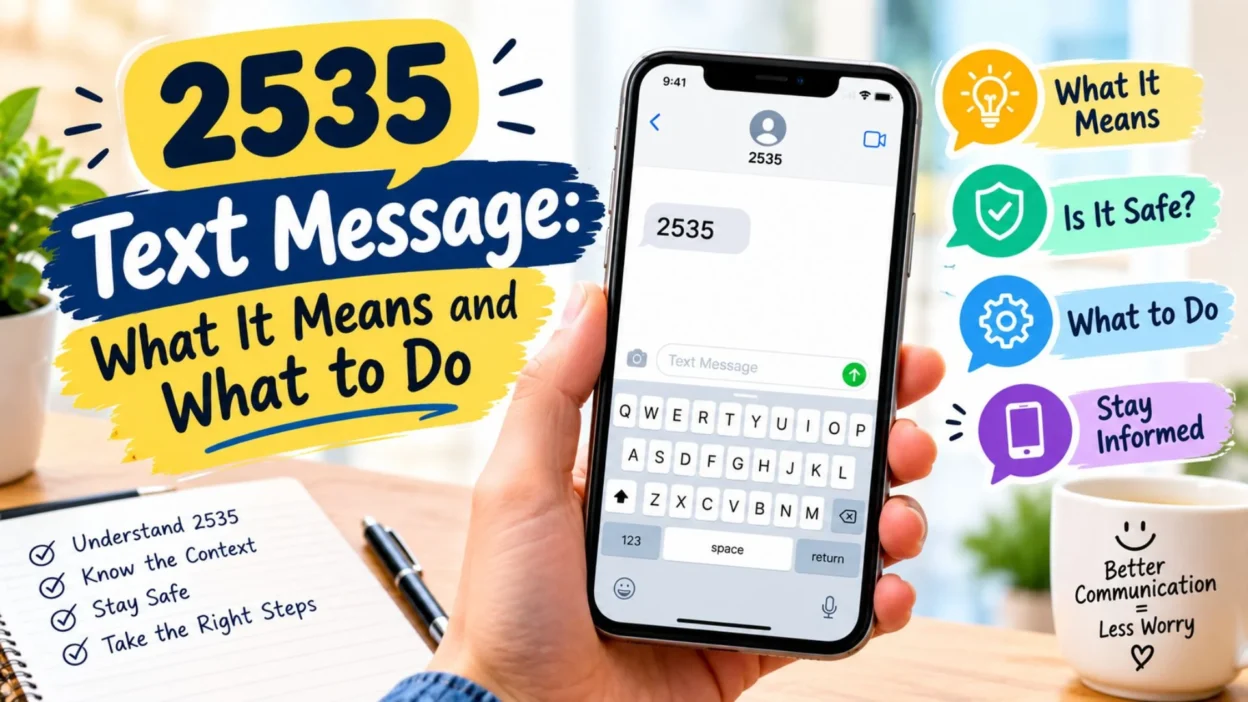
People searching for 2535 text message usually want to know why this number appeared on their phone.
They may have received a message from 2535 and want to identify the sender. They may also wonder whether the message is legitimate, promotional, or suspicious.
Search results show that 2535 is used as a short code in some messaging contexts. Recent reports from T-Mobile customers connect the number with account-related messages. However, a short code alone does not prove that every message from it is genuine.
This guide explains what a 2535 text message can mean. It also covers common situations, safety checks, and simple steps you can take.
What Is a 2535 Text Message?
A 2535 text message is a message sent from the five-digit short code 2535.
Short codes are commonly used by businesses and services for automated texts. They can send alerts, reminders, account updates, verification messages, and other notifications.
However, the meaning depends on the actual message you received.
Recent customer reports connect 2535 with T-Mobile-related account notifications. One report specifically described payment-related messages from the short code.
Therefore, you should check the message content before deciding what it means.
The number itself is only one clue.
Why Did I Get a 2535 Text Message?
There are several possible reasons.
For example, you may receive an automated message after an account event. The message could also relate to billing, payments, or another service notification.
Recent reports from T-Mobile customers describe receiving messages from 2535 about account activity. Some users reported payment notifications from the number.
Still, your specific message matters most.
Look at the sender name, wording, account details, and links. Also, consider whether you recently made a payment or changed an account setting.
If everything matches an action you recognize, the message may be a routine notification.
If something looks unusual, pause before responding.
Common 2535 Text Message Situations
The following situations can help you understand why the message appeared.
Account Notifications
Some users report receiving account-related messages from 2535.
These messages may appear after an account action or update. Therefore, the timing can provide a useful clue.
Think about what you recently did with the related service.
Payment Notifications
Recent reports specifically describe 2535 messages connected with payments. Some customers said they received notifications after making monthly payments.
However, do not assume every payment-related message is genuine.
Check your account through a trusted method instead of relying only on the text.
Automated Service Messages
Businesses often use short codes for automated communication.
Such messages can arrive without a person manually typing them. That makes the wording seem unusual sometimes.
So, an automated tone does not automatically mean something is wrong.
Unexpected Messages
You may receive a message you did not expect.
In that case, avoid clicking links immediately. Instead, verify the information independently.
This simple step can prevent many unnecessary problems.
Is a 2535 Text Message Legitimate?
A message from 2535 may be legitimate, but you should verify the content.
Recent user reports associate 2535 with T-Mobile account messages. However, those reports are user experiences rather than official confirmation for every message sent from the number.
That distinction matters.
A familiar short code does not make every message automatically trustworthy.
Check these details:
- Does the message match an action you recently made?
- Does the account information look correct?
- Does the message use normal language?
- Is the sender connected to a service you actually use?
- Does the message pressure you to act quickly?
- Does it ask for sensitive information?
- Does it contain an unexpected link?
If something feels inconsistent, verify it through the company’s normal website or app.
What Should I Do If I Receive a 2535 Text?
First, do not panic.
Read the message carefully. Then compare its information with your actual account activity.
If the message mentions a payment, check your account using the usual app or website. Do not use a link inside an unexpected message.
Likewise, avoid sharing passwords, verification codes, or other sensitive information through a text.
If the message looks suspicious, you can delete it after reviewing the details.
You can also contact the relevant company through a trusted customer-service channel.
That gives you a safer way to confirm whether the message is real.
2535 Text Message and T-Mobile
The number 2535 has appeared in recent discussions involving T-Mobile customers.
One recent Reddit discussion described a message from 2535 and identified it as an apparent T-Mobile-related short code. Another commenter said they had received payment notifications from the number.
However, community reports can contain mistakes.
They should not replace information from the carrier itself.
If your 2535 message appears to involve T-Mobile, check your account directly through your normal T-Mobile access method.
That lets you compare the message with your actual account activity.
If the information does not match, contact the carrier through an official channel.
Should I Reply to 2535?
That depends on the message.
Some legitimate automated services support commands such as HELP or STOP. However, you should understand who operates the short code before replying.
If you do not recognize the message, verification should come first.
Also, never send private information simply because a text requests it.
If the message contains a suspicious link, do not open it.
Instead, visit the relevant service through a method you already trust.
Can a Text From 2535 Be a Scam?
A suspicious text can come from many different sender numbers.
Therefore, you should judge the message by its content rather than the number alone.
Recent discussions about 2535 include warnings from users about suspicious links and the possibility of spoofed sender information.
A few warning signs deserve attention:
- The message creates unnecessary urgency.
- It asks for sensitive information.
- It contains an unexpected link.
- It threatens immediate account problems.
- It asks you to confirm information you did not change.
- The wording looks unusual or inconsistent.
- The message does not match your account activity.
When several warning signs appear together, stop and verify the message independently.
How to Check a 2535 Text Safely
You do not need complicated tools.
Instead, use a simple verification process.
Check Your Account
Open the official app you normally use.
Alternatively, type the company’s website address yourself.
Then check whether the event mentioned in the message actually happened.
Avoid Unexpected Links
Do not click a link simply because a text tells you to.
Instead, use your normal app or website.
This removes the message link from the verification process.
Check Recent Activity
Look at recent payments, account changes, or notifications.
If the text mentions something you recognize, the details may line up.
If they do not, investigate further.
Contact the Company
Use the contact information from an official source.
Do not automatically use a phone number or link included in a suspicious message.
This approach gives you a cleaner way to verify the situation.
Short Answers About 2535 Text Messages
- 2535 is a five-digit messaging short code.
- Recent reports connect 2535 with T-Mobile-related notifications.
- Some users report payment-related messages from 2535.
- The number alone cannot prove that a message is genuine.
- Always check the actual message before taking action.
- Avoid unexpected links until you verify the sender.
- Use your normal account app or website for confirmation.
2535 Text Message Safety Tips
A few simple habits can make unexpected texts easier to handle.
Do Not Rush
Scammers often try to create urgency.
Take a moment before clicking anything.
Verify Independently
Check the account directly.
That is usually more reliable than trusting the text itself.
Protect Your Information
Never share passwords or security codes because a random message asks for them.
Keep sensitive information private.
Watch for Strange Links
Unexpected links deserve extra attention.
If you need to visit an account, open the official app instead.
Keep Your Messages Organized
Deleting obvious spam can reduce confusion later.
However, keep important messages if you need them for reference.
What If I Already Clicked a Link?
If you clicked an unexpected link, do not panic.
First, close the page if it looks suspicious.
Next, avoid entering additional information.
If you entered a password, change it through the official service. Also, make sure your new password is unique.
If you entered financial information, contact the relevant financial institution through its official contact method.
You can also report suspicious messages through the appropriate service.
Most importantly, act quickly when sensitive information may have been exposed.
What If 2535 Keeps Texting Me?
Repeated messages can become annoying.
First, determine whether the messages relate to an account you actually use.
If they do, check your notification preferences through the official service.
If they do not, treat the messages cautiously.
Do not interact with suspicious links or requests.
You can also use your phone’s built-in reporting and blocking options when appropriate.
The exact controls vary by device and messaging app.
2535 Text Message: Quick Checklist
Before responding to an unexpected text, ask yourself:
- Do I recognize the service?
- Did I recently make the mentioned transaction?
- Does the information match my account?
- Is the message asking for private information?
- Does it include an unexpected link?
- Is it pressuring me to act immediately?
- Can I verify it through the official app?
If several answers raise concerns, stop before taking action.
Verification is usually easier than fixing a problem later.
Frequently Asked Questions
What does a 2535 text message mean?
A 2535 text message comes from the five-digit short code 2535. Recent customer reports associate the number with T-Mobile-related account notifications, including payment messages.
Is 2535 a T-Mobile number?
Recent reports indicate that T-Mobile customers have received messages from 2535. However, the safest approach is to verify your specific message through your T-Mobile account rather than relying only on the sender number.
Why did 2535 text me about a payment?
Some recent users reported receiving payment-related notifications from 2535. If you received one, compare its details with your actual account activity.
Should I click a link in a 2535 text?
Be cautious with unexpected links. Instead, open the relevant service through its normal app or website and check your account directly.
What should I do with a suspicious 2535 message?
Do not provide sensitive information or click unexpected links. Verify the message through an official channel, then use your phone’s reporting or blocking options if appropriate.
Conclusion
A 2535 text message can be confusing when you do not recognize the sender.
Recent customer reports connect 2535 with T-Mobile-related notifications, including reports about payment messages. However, those reports do not establish that every message from the short code is legitimate.
Therefore, the best approach is simple.
Read the message carefully. Check your account independently. Avoid unexpected links. Also, never share sensitive information just because a text requests it.
If the message matches something you recently did, it may be a routine notification. Still, verification is always useful when you feel uncertain.
So, the next time 2535 text message appears on your phone, take a breath and check the details first.
When a message raises questions, verify before you interact.

Emma Richardson is a content writer passionate about creating heartfelt messages, wishes, and greetings for every occasion. She enjoys helping readers express their emotions with meaningful words that strengthen relationships and celebrate life’s special moments.